Media Embargoes and Exclusives: A Singapore PR Guide
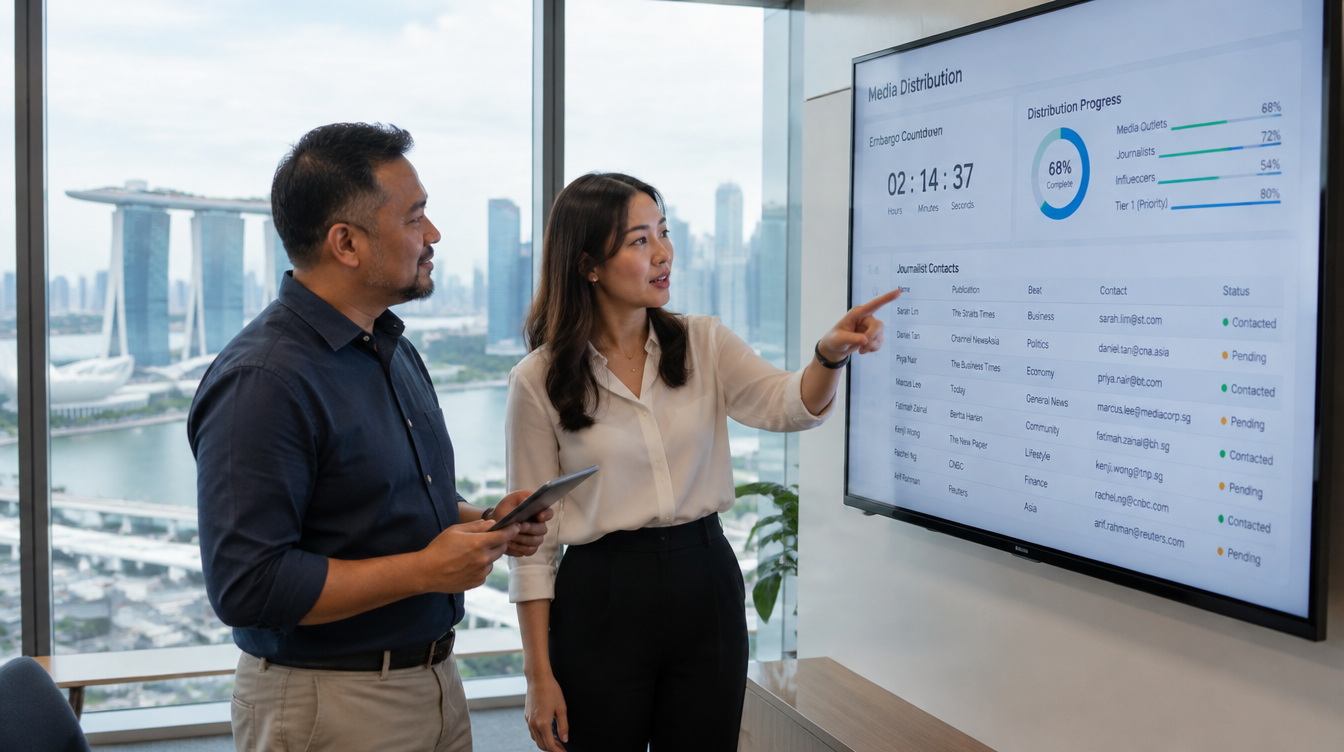
A press release lands in a journalist’s inbox on a Tuesday afternoon with one line sitting above the headline: not for publication before Thursday, 9am. The reporter reads it, makes a few notes, and waits. Nothing forces that wait except an understanding built over months, sometimes years, between that journalist and the PR team who sent it.
That understanding, more than any contract or legal clause, is what a media embargo actually is. For Singapore communications teams juggling product launches, funding rounds, and leadership changes, knowing when to ask for an embargo, when to offer an exclusive instead, and when to simply distribute a release broadly without conditions can shape how a story lands almost as much as the writing itself.
What a Media Embargo Actually Promises
A media embargo is a request, not a binding agreement. When a PR team marks a release "embargoed until," it asks journalists to hold publication until an agreed time, usually in exchange for advance access that lets them prepare a fuller, more accurate story. Nothing in Singapore law or most newsroom arrangements obliges a reporter to honour that request once the material is in their hands, so the whole system runs on reputation. PR Daily has made the point plainly: an embargo only works because of the journalist choosing to respect it, since a label alone binds nobody, and some reporters will publish early if the pressure to break a story first outweighs the relationship cost of disappointing that particular PR contact.
Exclusives Work Differently, and Usually Better for Bigger News
An embargo shares the same release with every outlet on a distribution list at the same moment, asking all of them to wait together. An exclusive does something else entirely: it gives one publication, often the one best placed to tell the story well, a head start before anyone else sees the material at all. A broad embargo maximises simultaneous reach across newsrooms, which suits routine updates such as quarterly summaries or minor product refreshes. An exclusive concentrates attention on a single, usually bigger story such as a significant funding round, a merger, or a senior leadership appointment.
The trade-off is fairly predictable. Offer an exclusive and the chosen outlet typically produces a longer, better-researched piece than a release competing for attention across a dozen inboxes at once, but every other journalist on the list finds out later that they were not the first call, which can sting if it happens too often with the same few names. Choosing between the two usually comes down to how big the news genuinely is, and to how well the PR team already understands what journalists actually want from the outlets they work with most.
Where Singapore’s Embargo Culture Gets Tested
The risk in breaking an embargo is not abstract for newsrooms here. In September 2023, Mothership’s press accreditation was suspended by the Ministry of Communications and Information after the outlet published a story on a PUB water price revision roughly a day before the embargo was due to lift. The managing editor called it the publication’s second such breach in two years and described it as serious, since the information affected every person in Singapore. The suspension meant Mothership’s reporters could not attend government briefings while the matter was investigated, a reminder that embargo breaches carry consequences for journalists too, not only for the PR teams whose timelines get disrupted.
Building Embargoes and Exclusives Into a Distribution Plan
Decide upfront, before a release goes anywhere, whether the news needs an embargo, an exclusive, or neither. A funding announcement, a significant hire, or a regulatory filing usually benefits from some control over timing. A routine update or a recurring quarterly summary rarely does, and attaching an embargo to something unremarkable just trains journalists to take the label less seriously the next time it is genuinely needed.
When an embargo is justified, state the lift time clearly in both the subject line and at the top of the release itself, and give reporters enough lead time to do something useful with the material. A same-day embargo rarely earns the trust it asks for. It also helps to follow up individually with the handful of journalists most important to that story, instead of relying on a single blast email to carry the request for everyone at once.
When offering an exclusive, say plainly that it is exclusive and for how long. Resist the temptation to quietly shop the same story to a second outlet while the first is still working on it. Singapore’s media scene is small and well-connected enough that this kind of double-dealing tends to surface quickly, and it usually costs a PR team more goodwill than any single story was worth gaining.
A Short Pre-Send Checklist
Before sending anything under embargo or offering it exclusively, a few basics are worth confirming:
- Confirm the exact lift date and time, and state it in both the subject line and the release header, not just one or the other.
- Check whether the story’s size genuinely justifies restricting access, rather than embargoing routine news out of habit.
- Identify the one or two journalists best placed to turn the story into a longer feature if an exclusive fits better.
- Keep a simple record of which outlets have broken an embargo before, so expectations can be set accordingly next time.
- Leave enough lead time for reporters to ask follow-up questions, not just enough time to read the release once.
These timing tools work only as well as the trust behind them, and Singapore’s media market is small enough that how a PR team handles that trust tends to follow it for years. Used sparingly and honestly, early access can turn a routine announcement into coverage that actually reflects a story’s importance. If your team would value a second pair of eyes on a distribution plan, feel free to get in touch with PressRelease.com.sg.